Show Me
Australian Catholic University (ACU) has published a collection of Pope Leo XIV’s reflections on education and artificial intelligence, days after the release of his historic first encyclical.
Key points:
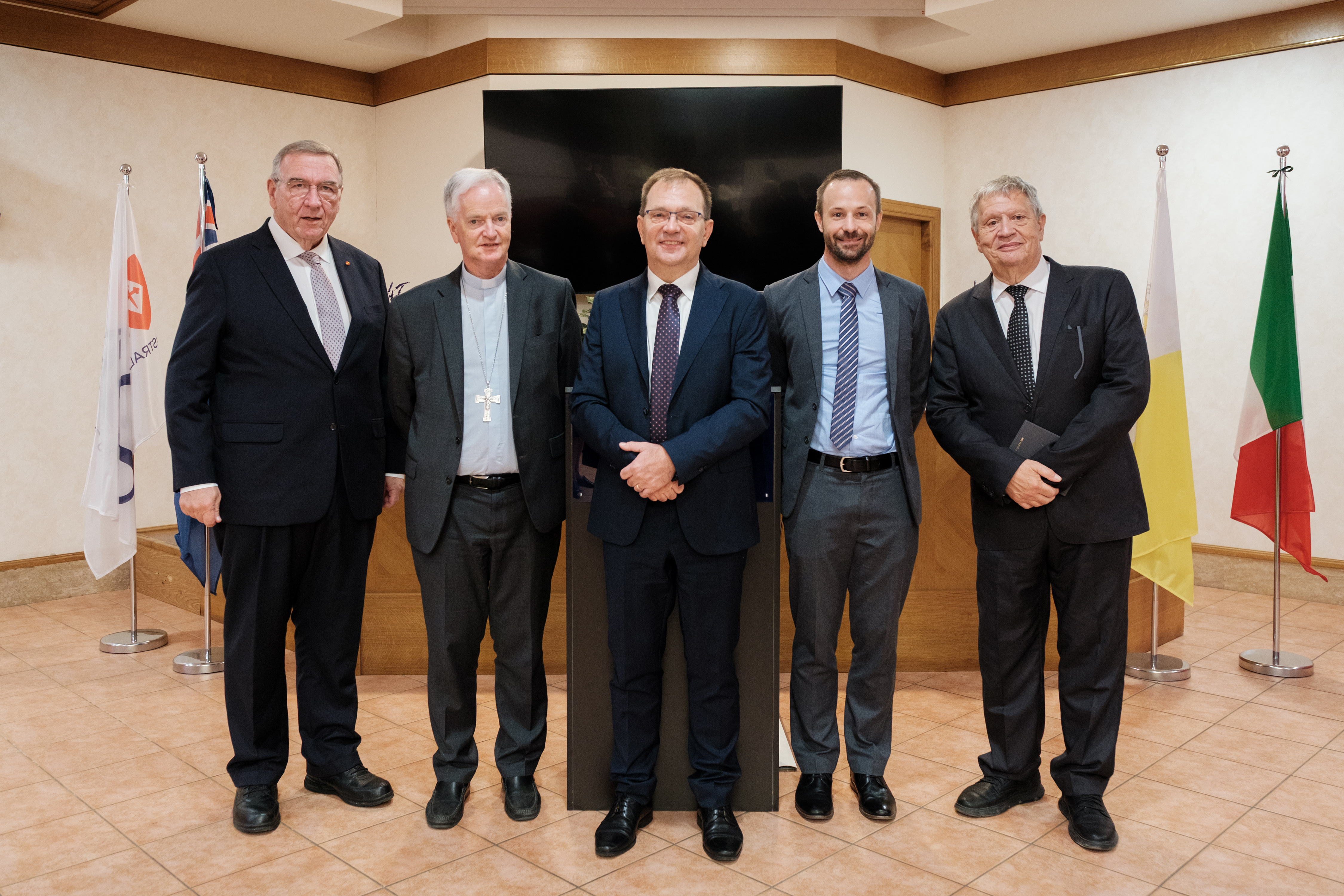
The book, Maps of Hope, includes ten of Pope Leo’s speeches, homilies and messages from the first months of his pontificate. These texts reveal the Holy Father’s emerging vision for education, artificial intelligence and ethics – and what they mean for the future of humanity.
The book was published by ACU in collaboration with the Vatican’s Dicastery for Culture and Education, with the support of its Prefect, Cardinal José Tolentino de Mendonça.
It was officially launched at ACU’s Rome Campus on Thursday 28 May, in the same week that Pope Leo published his first encyclical, Magnifica humanitas, which focuses on the protection of human dignity in the digital age.
The book launch was attended by representatives from the Vatican, including Bishop Paul Tighe, Secretary of the Dicastery for Culture and Education, who was among the guest speakers. Attendees also included Hon Keith Pitt, Australia’s Ambassador to the Holy See, and other guests from the academic, religious and diplomatic communities of Rome.
ACU Vice-Chancellor and President Professor Zlatko Skrbis said Maps of Hope provided important insights into the Pope’s thinking on the most important issues of our time, including AI, human dignity and the ethics of technological development.
“Maps of Hope grew out of a conversation here in Rome late last year, when Cardinal Tolentino suggested that ACU might gather Pope Leo’s early reflections on education and artificial intelligence into a single volume,” Professor Skrbis said.
“The collaboration with the Dicastery for Culture and Education that produced this book is one example of what becomes possible when institutions across the Church share a single question and meet it with purpose.
“The ten texts gathered in Maps of Hope were written and delivered in the early months of the pontificate – taken together, they tell us something about Pope Leo’s reading of the moment.
“Pope Leo has chosen to focus on what he has called the ‘new social question’ – the place of artificial intelligence in human life, and what it means for our understanding of what is distinctly human.”
Maps of Hope is structured in two parts – covering Pope Leo’s insights on education and artificial intelligence. The book takes its title from Pope Leo’s Apostolic Letter Drawing New Maps of Hope – his most ambitious articulation, to date, of a vision for Catholic education.
Professor Skrbis said the Pope’s previous experience as a teacher deeply informed his approach to education.
“Pope Leo came to the papacy as a former teacher of mathematics and physics at high school, seminary and university level,” Professor Skrbis said.
“The warmth he displays to students is unmistakable in these texts. He doesn’t speak of education in abstract terms. He speaks of classrooms, of encounters between students and teachers, of the restless searching that characterises youth. He returns again and again to the question of what it means to be human. That is also the question that Catholic universities like ours must keep alive.”
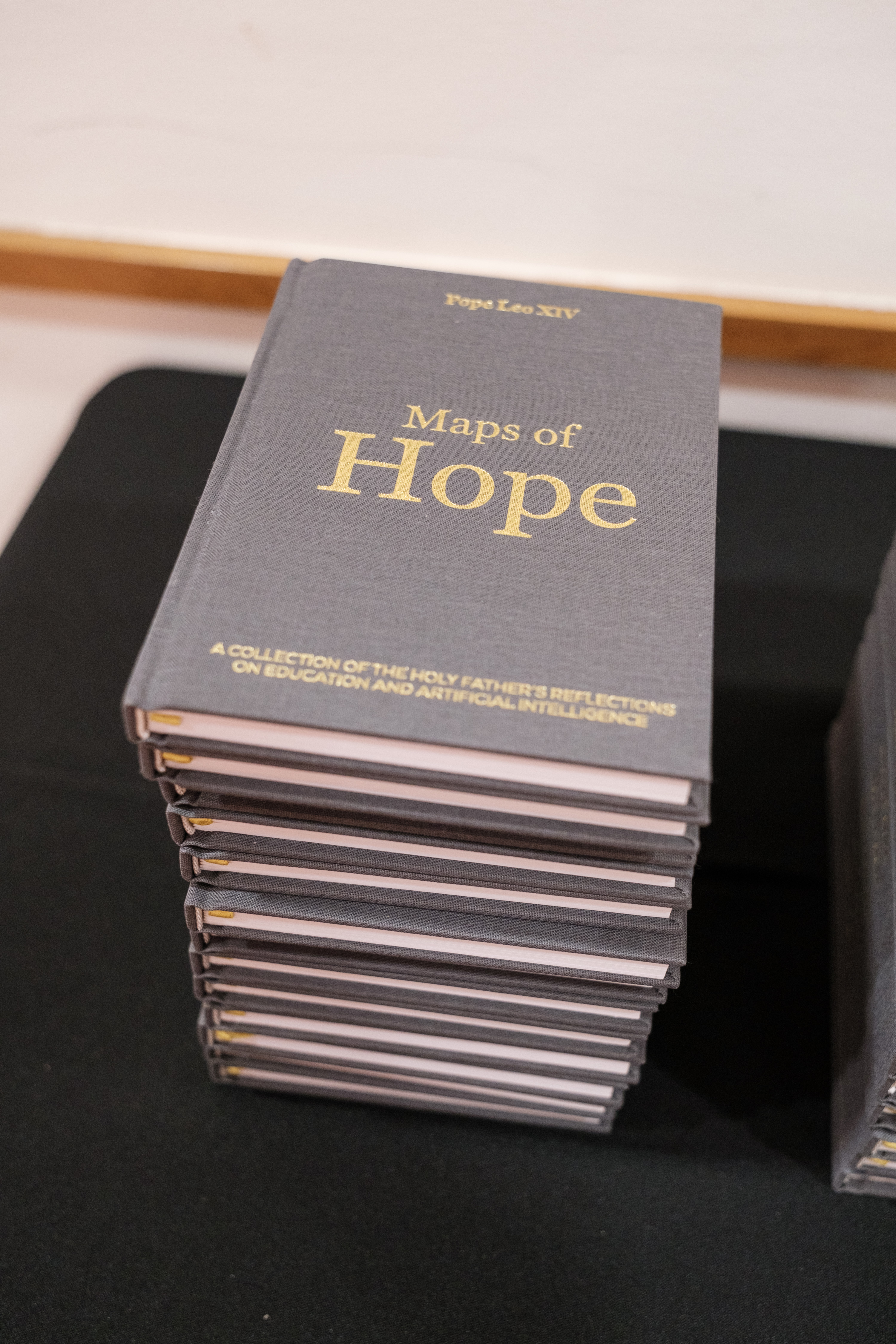
In his foreword to the book, Cardinal Tolentino writes that education and artificial intelligence “together define both the challenge and the promise of our time”.
“The Holy Father approaches these themes not with fear but with luminous confidence. Drawing on the rich inheritance of Catholic social teaching, he reminds us that technological progress is part of God’s plan for Creation, but that it must always be guided by and ordered toward the dignity of the human person.”
Maps of Hope also features substantial contributions by two distinguished ACU scholars. Reverend Associate Professor Ormond Rush, a leading theologian, reflects on the Pope’s writings on education. Associate Professor Xavier Symons, Director of ACU’s Plunkett Centre for Ethics, engages with the Pope’s reflections on artificial intelligence, and spoke about them at the launch.
“Maps of Hope serves as a companion volume to Magnifica humanitas,” Associate Professor Symons said.
“Both show the freshness and vigour of Catholic social teaching, and the enduring power of concepts like relational intelligence, solidarity and human dignity.”
A digital edition of Maps of Hope is now available to read and download for free on the ACU website.
The initiative forms part of ACU’s broader commitment to leadership in AI ethics and interdisciplinary research at the intersection of technology and the humanities.
The university’s focus on human flourishing includes programs, partnerships and research focused on responsible innovation, ethics, public policy, theology and technology.
ACU’s Rome Campus is the base for international collaboration among universities, governments and the Church, with a focus on upholding the dignity of the human person and promoting the common good.
We're available 9am–5pm AEST,
Monday to Friday
If you’ve got a question, our AskACU team has you covered. You can search FAQs, email, live chat, call – whatever works for you.

 Facebook
 Bluesky
 LinkedIn
 Copy Link