
Show Me
The largest ever study of racism in Australian universities demands a response rooted in both civility and care, writes ACU Vice-Chancellor and President, Professor Zlatko Skrbis.
There is a particular kind of leadership wisdom that announces itself quietly. Pope Leo XIV’s recent message for the season of Lent is exactly that kind of message.
Amid its reflections on fasting and prayer, it contains an observation that is modest in tone and considerable in implication: that one of the most meaningful forms of self-restraint available to us is the restraint of our own words.
To fast, Pope Leo suggests, from language that offends and hurts our neighbour. To resist rash judgment and refuse the habit of speaking ill of those who cannot defend themselves. And in place of those words, to deliberately and effortfully cultivate kindness, respect, and the willingness to truly listen and learn.
As a description of what university life at its best should look like, I find this rather compelling.
Last month, the Australian Human Rights Commission released the results of the Racism@Uni Study – the largest examination of racism in Australian universities ever conducted.
More than 76,000 students and staff across 42 universities participated, with some 70 per cent reporting they had experienced indirect racism, including hearing or seeing racist behaviour directed at their community. Perhaps even more concerningly, only six per cent of those who experience direct racism ever make a formal complaint – many citing fear of consequences and distrust of institutional processes.
These findings deserve our full attention. Universities are a cross-section of society, and as geopolitical tensions ripple across the globe, their effects are felt on campuses, too. Fear and hurt do not stop at the university gate, and our obligation is to ensure they are not compounded once inside it.
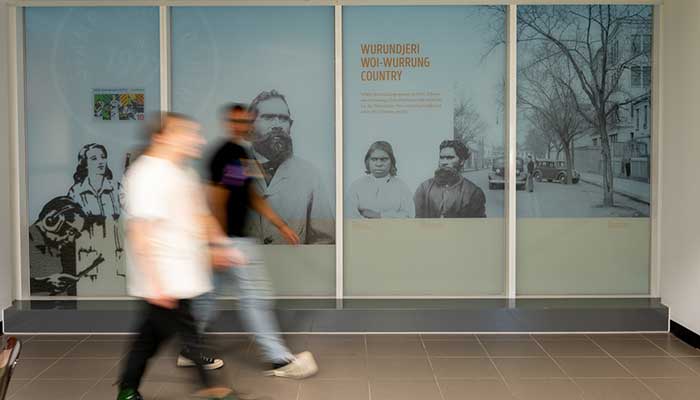
ACU’s response to this begins with a conviction at the heart of our mission: that every human being carries inherent dignity – and that dignity is not partial, conditional or negotiable. This is a foundational belief, drawn from the Catholic understanding of human flourishing, which shapes everything we do.
Discrimination on the basis of nationality, race, religion or background is therefore a contradiction of our deepest institutional purpose. Such discrimination harms the notion of the common good, weakening the fabric of our society and our communities.
ACU strongly condemns antisemitism, Islamophobia, racism against First Nations peoples, and all other forms of racial hatred and prejudice, without qualification and without exception. In practice, this means we combine the exercise of academic freedom with active cultivation of environments where every person’s dignity is affirmed. Where Aboriginal and/or Torres Strait Islander peoples are recognised and respected as the First Peoples of this land. Where the cultural, linguistic and religious diversity of our community is genuinely embraced. And where prejudiced behaviour – whenever and wherever it surfaces – is named and addressed.
Pope Leo tells us that words of hatred, left unchecked, crowd out the space that words of hope and peace should occupy. The Racism@Uni findings show us, with uncomfortable clarity, how much of that space needs to be reclaimed.
In this Lenten season, I am asking all members of our community – staff and students of every background and belief – to take that seriously. To speak with greater restraint. To listen with greater care. And to hold ourselves, and each other, to the standard that our mission demands: a university where every person can flourish – learning, thinking and contributing within a space of safety, dignity, and belonging.
This article was originally published in ACU’s Staff Bulletin and is part of the Vice Chancellor’s Blog, which highlights stories, insights and perspectives from across the university.
We're available 9am–5pm AEST,
Monday to Friday
If you’ve got a question, our AskACU team has you covered. You can search FAQs, email, live chat, call – whatever works for you.

 Facebook
 Bluesky
 LinkedIn
 Copy Link