Upcoming Events

In Focus: Executive Dean Presents

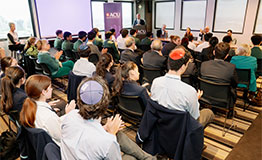
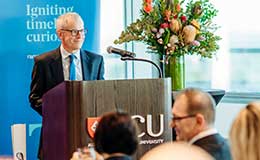
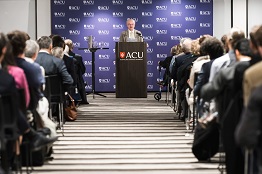
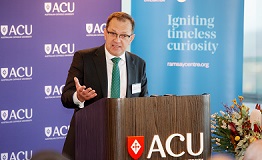
In Focus: Executive Dean Presents is a series of major panel discussions that draws on ACU's expertise, leading thinkers and decision makers to tackle current and emerging issues for arts and education and how they will shape the future of Australia.


Learn more

View more past events

Executive Dean Lecture Series: Educating for Flourishing, with Professor Rich Ryan 

About

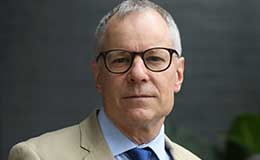
Internationally renowned psychologist and co-developer of Self-Determination Theory (SDT), Professor Richard Ryan will explore the role of education in supporting human flourishing and wellbeing. 

In this engaging lecture, Professor Ryan will discuss: 

  • The aims of education, historically and today, and why flourishing has emerged as a shared goal for education systems. 
  • What Self-Determination Theory research reveals about motivation, learning, and wellbeing across schools, higher education, and health professional training. 
  • How schools and learning environments might be reimagined if designed to foster flourishing
  • The relationship between wellbeing and achievement, and why these outcomes can work in synergy rather than in competition. 

This lecture will be of interest to academic and professional staff interested in educational leadership, medical and nursing education, student wellbeing, motivation, and the future of education. 

Date 
Tuesday, 13 October 2026 

Time 
5:30–7:30pm 

Location
Level 7, St Teresa of Kolkata Building, 115 Victoria Parade, Fitzroy 

Registration 

Please register your attendance with this link

Register here


Executive Dean Lecture Series: The Public Facing Humanities  

About

What role should the humanities play in Australian society, and how can humanities scholars contribute more visibly to the conversations shaping our shared future? 

The next In Focus: Executive Dean Presents will explore the visibility, value, and influence of humanities expertise in Australia. Chaired by Professor Larissa McLean Davies, Executive Dean of the Faculty of Education and Arts, the event will bring together leading thinkers to consider how the humanities can inform media commentary, policy development, and civic debate. 

Fulbright Specialist, Professor Costica Bradatan (Texas Tech University) will open the evening with a short lecture on public-facing humanities, followed by a panel with distinguished humanities scholars. Together, they will examine the opportunities and pressures shaping engagement beyond the university, including media ecosystems, political debate, institutional settings, and the need to prepare humanities graduates for meaningful participation in the workforce and civic life. 

Speakers will consider how universities can support researchers to contribute beyond the academy, and what is needed to build stronger connections between humanities research, public understanding and decision making. 

This timely event will invite audiences to reflect on the value of the humanities, the responsibilities of public-facing scholarship, and the approaches needed to enrich democratic debate in contemporary Australia.

Date 
Tuesday, 20 October 2026 

Time 
5:00-8:00pm 

Location
The Gleeson Auditorium, ACU Strathfield Campus, 25A Barker Road, Strathfield NSW 2135

Registration 

Registration link to come 

Guest lecturer

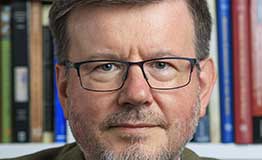
Professor Costica Bradatan (Texas Tech University) 

Paul Whitfield Horn Distinguished Professor of Humanities, Honors College, Texas Tech University 

Professor Costica Bradatan is Paul Whitfield Horn Distinguished Professor of Humanities in the Honors College at Texas Tech University. A philosopher and public intellectual, he works across continental philosophy, religion and philosophy, literature, film and the history of ideas, with particular interest in failure, humility, sacrifice, mortality and the lives of philosophers. He is the author and editor of more than a dozen books, including Dying for Ideas: The Dangerous Lives of the Philosophers and In Praise of Failure: Four Lessons in Humility, which received the 2024 PROSE Award in Philosophy. His work has been translated into more than thirty languages, and he writes essays, reviews and opinion pieces for publications including the New York Times, Washington Post, New York Review of Books, Times Literary Supplement, Aeon and Commonweal. A Fulbright Scholar and Fulbright Specialist, he brings philosophical scholarship into wide public conversation about the human condition, intellectual life and the value of the humanities. 
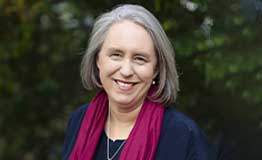

Panelists

Professor Larissa McLean Davies 

Executive Dean, Faculty of Education and Arts, Australian Catholic University 

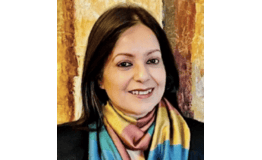
Professor Larissa McLean Davies is Panel Chair and Executive Dean of the Faculty of Education and Arts at Australian Catholic University. An internationally recognised academic leader, she has held senior executive roles at ACU and the University of Melbourne, where she led major strategic initiatives in education, curriculum innovation, and workforce development. Her leadership spans large-scale research, institutional transformation, and national reform in teacher education, including the development of Australia's Teaching Performance Assessment. She continues to lead influential work across Indigenous literatures, climate education, sustainability, and social justice. 

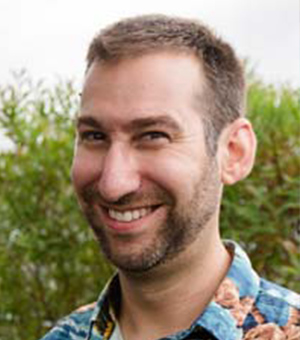
Professor Kate Fullagar 

Professor of History, Institute for Humanities and Social Sciences, Australian Catholic University 

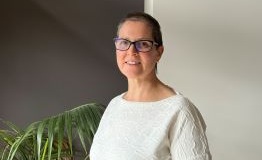
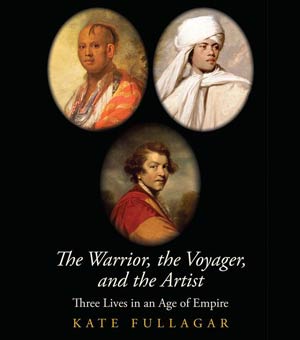
Professor Kate Fullagar is a historian of the eighteenth-century world and Professor of History at Australian Catholic University’s Institute for Humanities and Social Sciences. President of the Australian Historical Association and a Fellow of the Australian Academy of the Humanities, she specialises in the history of the British Empire, Indigenous-imperial relations, visual culture and experimental biography. Her acclaimed books include Bennelong & Phillip: A History Unravelled, The Warrior, the Voyager, and the Artist: Three Lives in an Age of Empire, and The Savage Visit. Her work brings comparative Indigenous history across Australia, the Pacific and North America into wider public conversation, and she is a prominent advocate for the public value of history and the humanities. 

Professor Susan Broomhall 

Professor of Early Modern Studies and Director, Gender and Women’s History Research Centre, Australian Catholic University 

Professor Susan Broomhall FAHA FRHistS is Professor of Early Modern Studies and Director of the Gender and Women’s History Research Centre at Australian Catholic University’s Institute for Humanities and Social Sciences. An internationally recognised historian of women, gender and emotions in the early modern world, her research spans women’s writing and literature, material culture, science and knowledge practices, cultural contact, religious and mission histories, and the legacies of the early modern past. She is the author and editor of numerous books and collections, including The Identities of Catherine de’ Medici, Elite Women and the Italian Wars, 1494–1559, Evangelizing Korean Women and Gender in the Early Modern World, and The Bloomsbury Cultural History of Gender. Her work brings the histories of gender, power and cultural encounter into broader public conversation, demonstrating the continuing relevance of the early modern world to contemporary debates. 

Professor Peter Anstey 

Director, Western Civilisation Program, Australian Catholic University 

Professor Peter Anstey FAHA is Director of the Western Civilisation Program at Australian Catholic University. A philosopher and historian of philosophy, he specialises in early modern philosophy, the history and philosophy of science, and the history of medicine, with particular focus on John Locke, Francis Bacon, Robert Boyle and the thinkers of the Enlightenment. Before joining ACU, he was Professor of Philosophy at the University of Sydney and inaugural Professor of Early Modern Philosophy at the University of Otago. He is the author or editor of numerous books, including John Locke and Natural Philosophy, Experimental Philosophy and the Origins of Empiricism, and The Oxford Handbook of British Philosophy in the Seventeenth Century. His work brings philosophy, science, medicine, literature and digital humanities into dialogue, showing how the intellectual traditions of the past continue to inform contemporary questions about knowledge, inquiry and public life. 

Have a question?

We're available 9am–5pm AEST,
Monday to Friday

If you’ve got a question, our AskACU team has you covered. You can search FAQs, email, live chat, call – whatever works for you.

Live chat with us now

Chat to our team for real-time
answers to your questions.

Launch live chat

Visit our FAQs page

Find answers to some commonly
asked questions.

See our FAQs