Show Me
Senior Lecturer in Computer Science and Data Science
Australian Catholic University
Areas of expertise: natural language processing; sentiment analysis; recommender systems; graph neural networks; explainable ai; machine learning; deep learning; predictive analytics; educational data mining
Email: [email protected]
Location: ACU North Sydney Campus
HDR Supervisor accreditation status: HDR Supervisor (Full)
ORCID ID: https://orcid.org/0000-0002-5071-7515
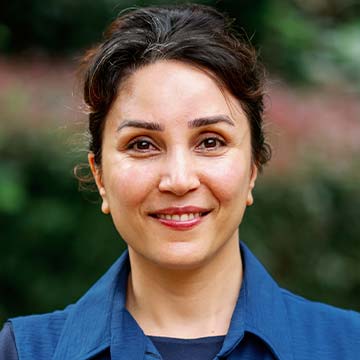
Dr Maryam Khanian Najafabadi is a Senior Lecturer in Computer Science and Data Science at Australian Catholic University. She is an AI and Machine Learning researcher with extensive experience in teaching and research across international academic environments. Her work focuses on natural language processing, recommender systems, and explainable AI, with a strong emphasis on ethical, transparent, and impactful AI for education, healthcare, and industry.
She has coordinated and delivered large-scale courses in programming, data science, and artificial intelligence at the University of Sydney (with over 800 students) and has led curriculum innovation integrating Generative AI, explainable AI, and graph neural networks. At ACU, she contributes to program development aligned with the University’s Responsible AI and Digital Trust research pillar and supervises both HDR and capstone projects.
Her research contributions include publications in leading Q1 journals, and she has received competitive research grants (including FRGS, UTARRF, and Research University Grants) as well as awards such as the Women Researcher Award in NLP and a Commendation for Excellence in Teaching.
Dr Maryam's current projects focus on advanced recommender systems and sentiment analysis, integrating deep learning, graph neural networks, and multimodal embeddings to address real-world challenges. Her projects include innovative frameworks such as: