
Show Me
Phone: 02 97014262
Email: [email protected]
Location: ACU North Sydney Campus
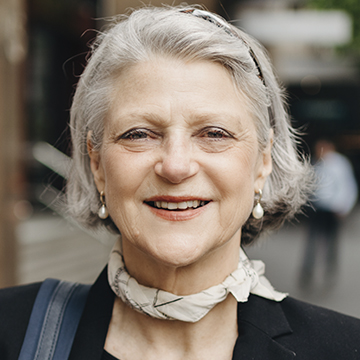
Dr Debra J. Phillips is an Education lecturer at Australian Catholic University. Her doctorate awarded in 2020, an autoethnographic analysis of suicidality, provided background for her ongoing work into teachers’ mental health. Dr Phillips’ current research and writing explore how teachers manage and negotiate workload stressors to continue teaching. The research includes how and why teachers are bullied by other teachers, the relationship between gendered violence and bullying of women teachers, and the use of narrative as a tool to manage workload stressors. Her writing and reporting on findings have a future orientation and includes conjecturing other possibilities as solutions to current circumstances. Dr Phillips’ research methodologies focus on narrative inquiry, autoethnography and reflective practice. Her growing interest is in how visual essays are transforming perceptions about how the world around us is understood and managed. Dr Phillips has a continued interest in how students with intellectual disability manage the school context, and the spirituality of people with intellectual disability.
Dr Phillips comes from a background of school-based teaching practice and a background of post-graduate study in education, education of students with disabilities, gender studies, narrative and theology which provides an informed position for her lectures in educational psychology, teachers’ mental health and disability education. Dr Phillips is a practicing artist.
My identity as an academic. I identify as both an academic and an artist. As an academic, my work involves both teaching and research. As a teacher I deliver face-to-face and online through ACU’s digital platform. I want to get it right so I can offer best-practice, world-class level of instruction, feedback and student-teacher relationship that is possible.
Research is a key part of my work as an academic. My research interests are in teachers’ mental health and burnout, gender, depression and suicidality, suicidality and spirituality, and imagined futures. My preferred research method is a reflective practice style autoethnography within a narrative inquiry frame.
The philosophy that underpins my work as an academic, teaching, research and writing which is derived from Elizabeth Grosz’s ontology of becoming; and articulated as a belief that onto-epistemology is kinetic and always on the move. Using narrative inquiry, I highlight and then counter-challenge how sociocultural narratives and contexts influence and frame broad understandings of mental ill health. My school-teaching experiences provided a specific reference point from which I analyse the issues surrounding teachers’ mental health and the comprehensive factors of teacher burnout. My interest in the ethical parameters that guide research have emerged from examining narratives of lived experience that tell of sensitive and taboo issues. This now frames my approach to collaborative practice in teaching, research and writing.