
Show Me
Key points:
As artificial intelligence transforms society, the most pressing challenge is ensuring that technology is guided by ethics, human dignity and the common good.
That was the message from experts at the launch of Australian Catholic University’s Human and Digital Futures initiative, which is designed to prepare graduates who can develop and use AI responsibly.
The Human and Digital Futures accelerator will drive the university’s new technology-focused courses. Technical subjects will be paired with complementary studies in ethics, helping students develop the skills needed to design, deploy and govern technology in the AI age.
The Human and Digital Futures initiative will also deliver research in areas like human-centred design and algorithmic fairness and cultivate industry partnerships that prioritise technology that promotes human progress and the common good.
ACU Vice-Chancellor and President Professor Zlatko Skrbis said it was vital for universities to explore what it meant to remain human in an age of technological disruption.
“In his recent encyclical, Pope Leo challenged universities directly, calling on us to speak up for the human person, to engage thoughtfully with AI, and to provide educational awareness around the proper and critical use of this technology,” Professor Skrbis said.
“ACU has already made that choice. AI is not a threat to be managed, or a tool to be adopted uncritically. It creates an opportunity to amplify what is most distinctively human: our creativity, our empathy, and our capacity for ethical reasoning.”
The panel event was chaired by ACU Provost Professor Julie Cogin, who underlined the importance of technology education that extended beyond technical skills.
“Our students learn to code and to question, because the world needs graduates who can do both,” Professor Cogin said.
“By embedding ethical and social perspectives across our technology programs, we're preparing our graduates to apply technology in ways that benefit society.”
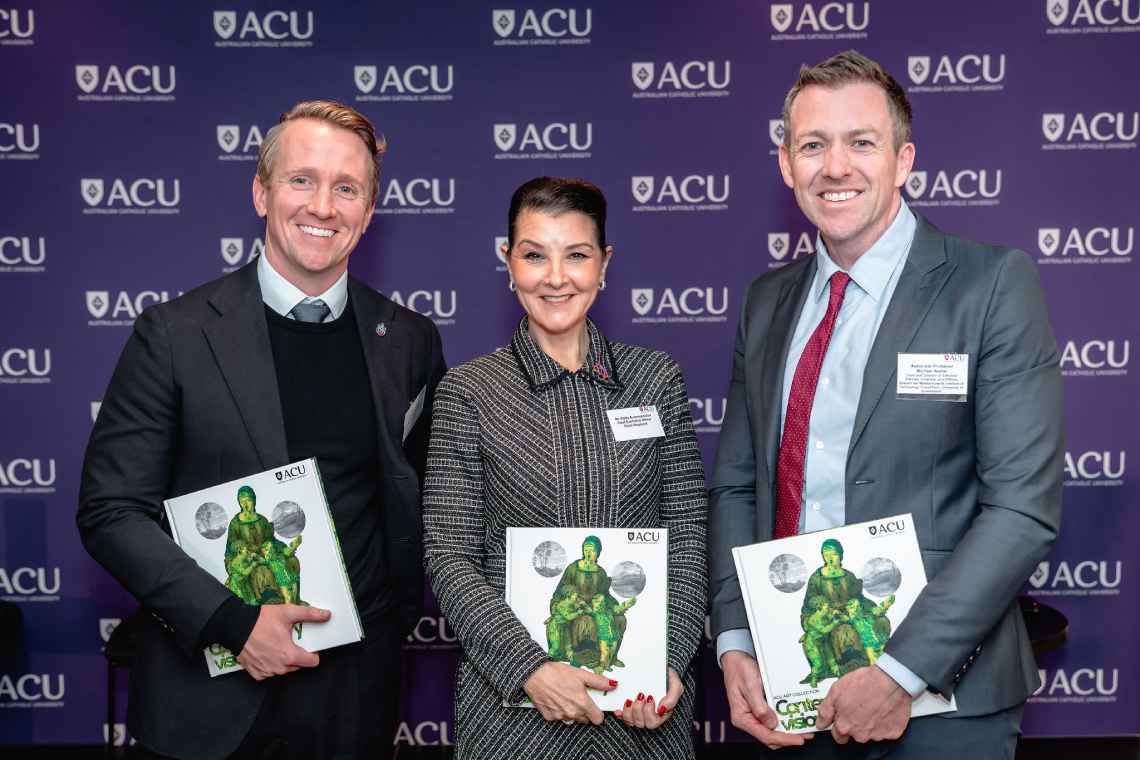
The panel featured leading voices from technology, industry and academia, including Good Shepherd CEO Ms Stella Avramopoulos, Chair and Director of Effective Altruism Australia
Associate Professor Michael Noetel, and St Vincent’s Health Australia Chief Medical Officer Dr Chris Robinson. They offered their thoughts on the extraordinary opportunities AI presents, and the importance of technological innovation that keeps humans in the loop.
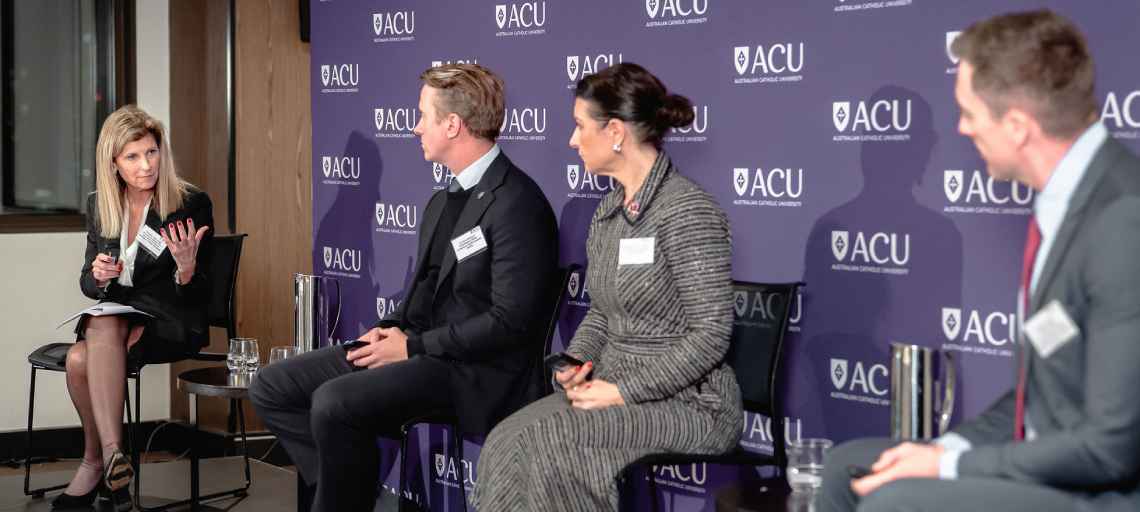
The wide-ranging discussion explored how the future of technology can prioritise the ethical over the technical, and the primacy of the person over things.
University of Queensland Associate Professor Michael Noetel said that human judgement and moral responsibility were more important than ever in an increasingly digital world.
He highlighted the importance of robust safeguards around AI, transparent governance and careful assessment of risks to ensure new technology remains beneficial for humanity.
“If humanity wants to stay in control of AI, we have a lot of work to do. As the Pope said, even the people building AI don't fully understand how it works. It's hard to guarantee safety when that's true, so we need many more layers of protection. Right now, a handful of companies are moving faster than the safeguards can keep up. Closing that gap is one of humanity's grand challenges.”
Good Shepherd CEO Stella Avramopoulos heads up an organisation that oversees family violence refuges, operates a 24-hour crisis hotline, and is the largest provider of financial wellbeing programs in the country. She said a proactive approach to AI was necessary, to ensure those who most needed it benefited from access.
“Corporations, service providers and government operate at different speeds, and it’s important that they are proactive in ensuring equitable access to tools that could save lives.”
St Vincent’s Health Australia Chief Medical Officer Dr Chris Robinson reflected on the opportunities AI offered to improve patient care and access to healthcare.
“Whilst AI promises great advancement within our healthcare system, this progress must be matched with clear standards that protect patients, keep clinicians at the helm and preserve, if not amplify, the human connection between the receiver and provider of care.”
Learn more about ACU’s courses and research in Computer Science, here
We're available 9am–5pm AEST,
Monday to Friday
If you’ve got a question, our AskACU team has you covered. You can search FAQs, email, live chat, call – whatever works for you.

 Facebook
 Twitter
 LinkedIn
 Copy Link