
Show Me
Australian Catholic University education experts have offered practical tips and advice to support students, parents, and educators at the start of the 2026 school year.
Connection, not perfection
ACU School of Education Associate Lecturer Kylie Vanderkley said parents should try and foster independence for children about to embark on their school journey.
"Families should encourage children to practise simple self-help skills, such as putting on shoes, opening lunch boxes and managing their belongs," she said.
"It also helps to practise school-day routines like bedtimes, morning schedules and expectations at drop-off."
Ms Vanderkley said the first few weeks of school were a big transition for prep students - physically and emotionally.
"Feeling nervous is completely normal - it's all about acknowledging those emotions, while framing school as an exciting new adventure.
"Children take their emotional cues from adults, so calm, confident language can help reduce anxiety and build excitement.
"When you're talking to your kids about their first day, speak positively about school and reassure children that their teachers know how to support them
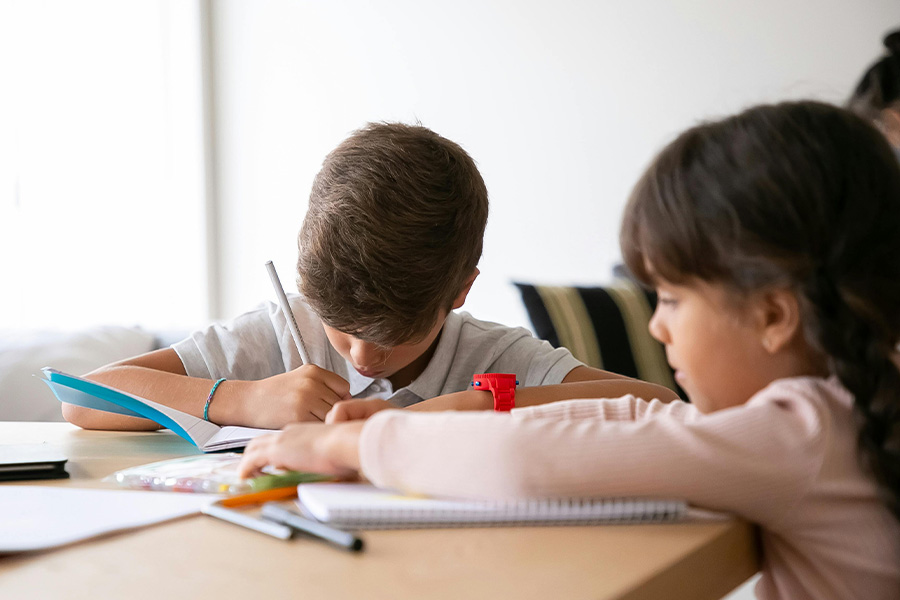
"It's also important to allow kids space for big emotions. It's normal for them to feel tired, emotional or unsettled in the first few weeks of school.
"The best thing parents can do is to limit after-school activities during the first few weeks of term and allow kids time to rest and play.
"Ultimately it's all about connection, not perfection - parents should listen, provide reassurance and keep communication open."
Creating stability and safety for students with additional needs
For families of students with additional needs, inclusive education expert Dr Matthew White said neurodivergent students may experience challenges with new teachers, routines, transitions, and sometimes expectations.
"Returning to the structure of school can be overwhelming after a break," Dr White said.
"To support a smooth transition back families should avoid additional pressures in the early weeks of term and focus instead on re-establishing predictable routines and emotional wellbeing."
Dr White said simple strategies could make a meaningful difference.
"Establishing a consistent afternoon routine, allowing time to decompress after school, and keeping expectations flexible during the first week can help students regulate and re-engage," Dr White said.
A supportive return to school is not about pushing students back to full capacity immediately. It is about creating stability, safety, and connection so learning can follow."
Dr White said it was important to open dialogue with schools early on.
"Families should keep communication open by checking in regularly about how students are feeling, rather than focusing only on academic demands. Allowing the first week to settle provides valuable insight into what supports may be needed moving forward," he said.
"If challenges continue, early conversations with schools can help identify practical adjustments and prevent stress from escalating."
Tips for newly arrived families
Early education expert Dr Audrey D'Souza Juma said that for newly arrived families, starting kindergarten or school could involve navigating confusing systems, language, routines and expectations.
Dr D'Souza Juma said families should ask about available services, including interpreters.
"Families should familiarise themselves with the school setting and reach out to teachers," she said.
"There is also a range of support services provided in schools to support children from language backgrounds other than English.
"It's important to use your home language as a strength to build children's confidence, identity and cognitive skills, and link up with community hubs or multicultural playgroups to support children's social development and build parent networks."
Advocating for child-safe environments
ACU Institute of Child Protection Studies Director Professor Daryl Higgins said parents and guardians should be confident to ask schools about how they keep children safe.
"It's important to understand your school's commitment to child-safe environments. Ask about their safeguarding policy - where is it, what does it cover, what types of issues have come up, and how have they addressed them at the school in the past," he said.
Professor Higgins called on families to talk to their children in the lead up to starting or returning to school about issues including body privacy, respecting others, appropriate behaviours of and towards others and the importance of disclosing anything they feel uncomfortable about.
"We have to embed these safety conversations into everyday communication between parents and children - one talk at a time."
Starting conversations about online safety
Institute of Child Protection Studies research associate Dr Gabby Hunt said parents should also be starting conversations about online safety as children headed back to school.
"I'd recommend parents change their approach. Instead of asking children directly about what they're doing online, you can ask about what kids their age see online, or what their friends talk about online.
"That removes some of the pressure on children and young people who might feel embarrassed or confronted, particularly if they're using social media when they shouldn't be.
"We also need to be skilling up parents and carers about how to look out for things online and support their children.
"The social media ban alone is not enough to protect our young people."
We're available 9am–5pm AEST,
Monday to Friday
If you’ve got a question, our AskACU team has you covered. You can search FAQs, email, live chat, call – whatever works for you.

 Facebook
 Bluesky
 LinkedIn
 Copy Link